Towns · Newton
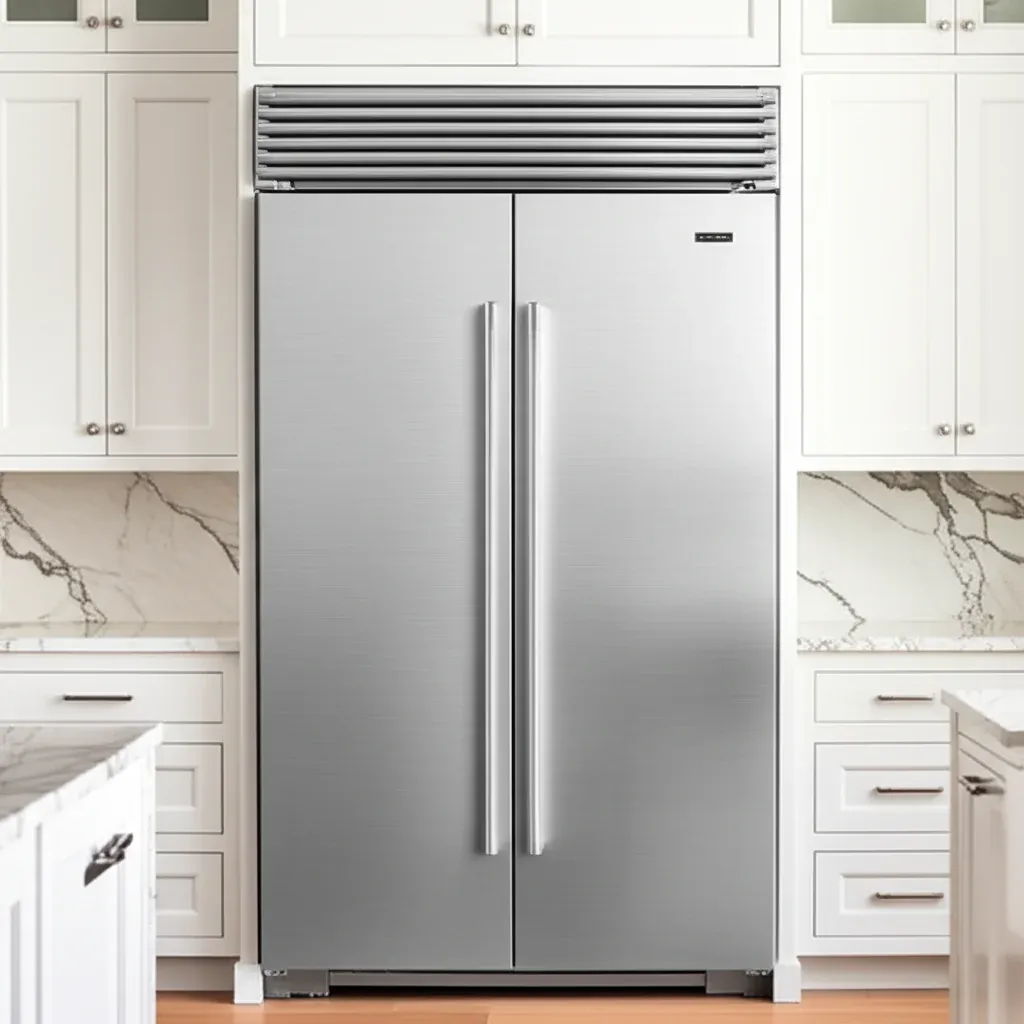
Sub-Zero refrigeration across the Newton villages
Newton is thirteen villages and about as many building periods, and the refrigeration follows the house: a panelled column scribed into a 1990s renovation of an 1890s frame behaves nothing like the same unit in a kitchen finished last spring.
01
What the housing stock does to a built-in
Most Newton kitchens sit at the back of the house, in the part that was rebuilt at least once. That is where the built-in ends up, usually on an interior wall with cabinetry hard against both sides, which leaves the base grille doing all of the breathing for a compressor and condenser that were sized for open air.
Two consequences show up over and over. A condenser that has been quietly loading up with dust for a few winters runs hotter than it should, so the compressor stays on longer, and the first thing anyone notices is a temperature that drifts up in July and recovers in October. And a tall door hung on an old frame that has settled slightly will stop meeting its seal at the top corner long before anyone sees a gap.
02
The faults that come out of Newton most often
- A warm compartment with the compressor plainly running — nearly always the evaporator fan or a defrost circuit that has stopped terminating properly, not a failed sealed system
- A slab of frost across the evaporator behind the rear panel, found only when the panel comes off
- Small, cloudy cubes in the weeks after a filter change, which is a flow problem rather than an ice maker problem
- A control board that came back confused after a street outage, common on the older classic built-ins
- Hinge sag on a full-height door, which reads as warm air at the top of the cabinet
The order those are checked in matters more than the list. A sealed-system diagnosis is the expensive answer, and it is the last one reached, not the first.
03
Working in a village kitchen
Access is the other half of a Newton call. Driveways are short, rear entries are tight and the basement stairs usually turn, so if a column has to come out of its opening it goes out the front, on straps, after the scribed panels come off. That is planned before anything is moved rather than discovered halfway through.
Almost none of it is necessary for the common faults. The condenser, the boards, the fans, the defrost circuit and the door hardware are all reachable from the front of the cabinet, which is why the diagnosis happens in the kitchen and the unit stays where it was fitted.
Newton, continued
- Parking, access and a Newton visit The practical side: driveways, entries, what to say when you book.
- Refrigerator repair Sealed system, evaporator, defrost, boards, fans, seals.
- Freezer repair Columns, drawers and the freezer half of a side-by-side.
- Ice maker repair Fill, freeze, harvest, and the water behind all three.
- Needham Over the line, and a different pair of housing waves.
- Mattapan Built-ins fitted into stock that predates them.
Reviews · Newton
What people said afterwards
4.9out of 5across 1,515 reviews
5 out of 5
Shingled Victorian, rear kitchen, and a doorway that barely takes a column. He got it out on straps without marking the casing. The condenser fan bearing was dry and dragging, which explained both the noise and the warmth.
Marcus D. · Newton
5 out of 5
Temperature alarm on the display with nothing obviously wrong inside. He put gauges on and found a slow leak at a brazed joint rather than a board fault. Repaired and recharged, and the alarm has not come back.
Gwen A. · Newton
5 out of 5
It filled with water and then never harvested. The module thermostat had failed and the inlet screen was partly blocked. Both dealt with in one visit, and he checked the shut off valve under the sink while he was here.
Susannah C. · Newton
Booking
Describe the fault. Get the figure before anything opens.
A flat $95 covers the visit and the diagnosis, and comes off the bill when you approve the repair. Visits run 8:00 am – 8:00 pm, seven days; the line is answered 24/7.