Towns · Concord
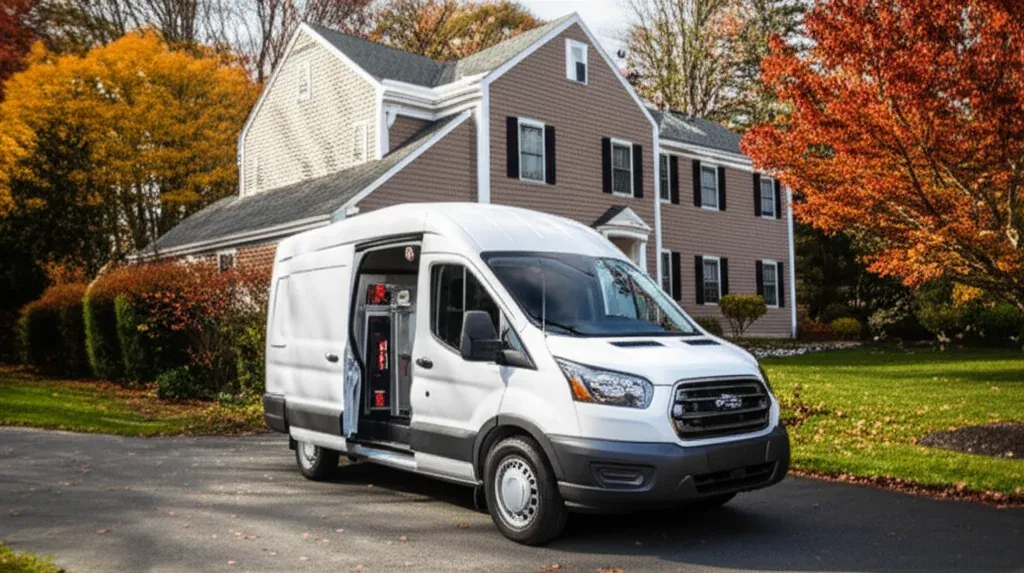
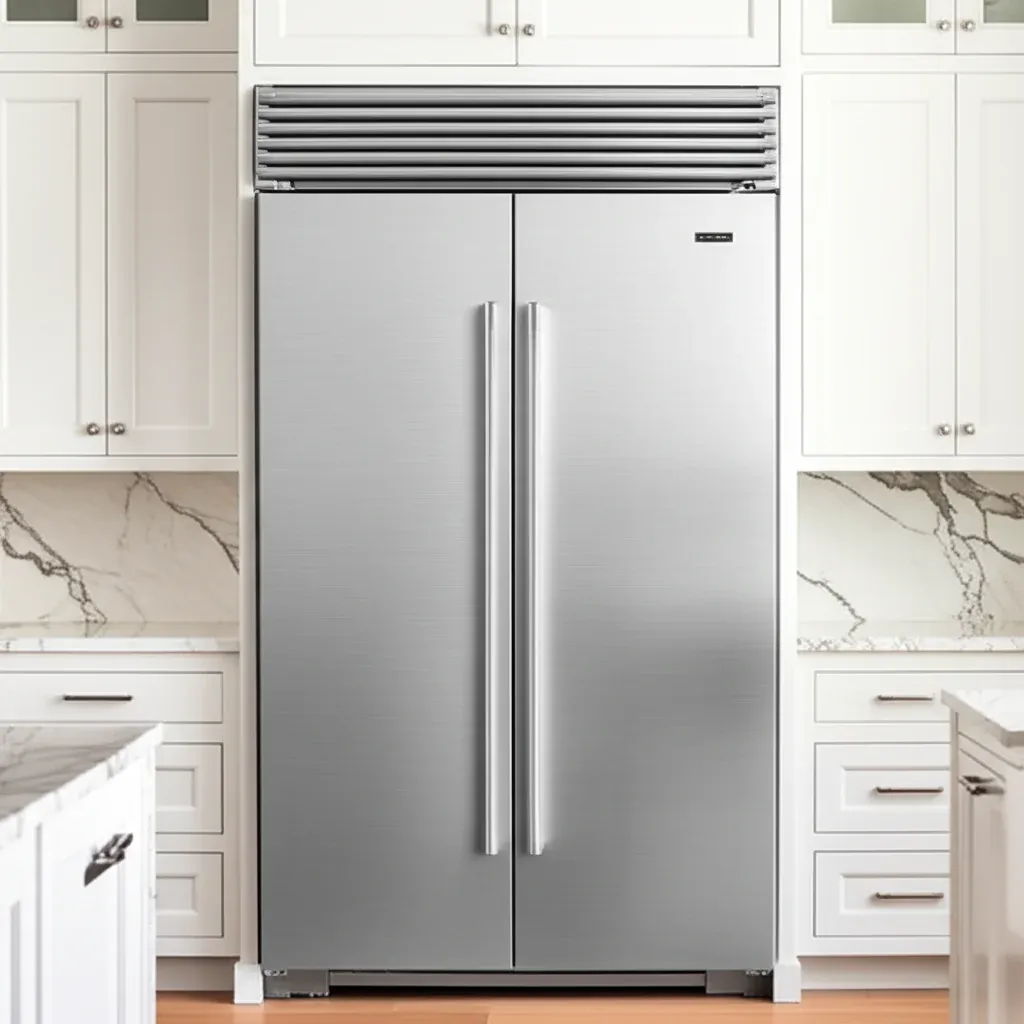
Sub-Zero refrigeration in an antique Concord house
Two things shape a Concord call more than anything else: the age of the structure the appliance was fitted into, and the water that reaches the ice maker.
01
Water first, because it explains half the calls
Away from the town water mains, plenty of Concord kitchens are fed from a private well, and well water carries mineral content that municipal supply does not. An ice maker is the most sensitive thing in the house to that. Scale builds on the mould and the fill tube, cubes come out small and cloudy, harvests get slower, and eventually the module stops ejecting cleanly at all.
The repair is often not the ice maker. It is the flow reaching it: filter age, the state of the line behind the cabinet, the shut-off it was plumbed to, and the pressure at the connection with the water actually running. That gets measured before a module is condemned, because a new module fed by the same restriction fails in the same way.
Sediment and mineral content also shorten the life of an inlet valve. If a unit has flooded once, the valve is worth looking at whether or not it is the current complaint.
02
What an old house does to a fitted cabinet
Antique frames move. Floors in an eighteenth or nineteenth century house are rarely flat, and a built-in refrigerator that was shimmed level at installation may not be level a decade later. A cabinet out of plumb by a small amount stops the door pulling itself shut on the last inch, and a door that hangs open by a millimetre puts the whole compartment into a slow losing battle with humidity.
Kitchens in these houses are also frequently in an ell or a rear addition with lower ceilings and less air movement than the room the appliance was specified for. Ambient temperature at the grille matters: a condenser rejecting heat into a warm, still corner is a condenser working near its limit before anything has gone wrong at all.
03
What gets checked, and in what order
- Both compartments measured against their set points, top and bottom
- The evaporator behind the rear panel: clear, lightly frosted, or slabbed with ice
- Where the defrost cycle terminates, and whether the heater and its sensor agree
- Condenser loading and fan behaviour behind the base grille
- The door seal along its full run, and the cabinet checked for level and plumb
- Water pressure and filter age at the connection, on any unit that makes ice
Where to go next
- Refrigerator repair Sealed system, evaporator, defrost, boards, fans, seals.
- Freezer repair Columns, drawers and the freezer half of a side-by-side.
- Ice maker repair Fill, freeze, harvest, and the water behind all three.
- Wine cooler repair Zone stability rather than cold, plus the door.
- Weston Column pairs, wine storage and one installation date.
- Newton What the village housing stock does to a built-in.
Reviews · Concord
What people said afterwards
4.9out of 5across 1,037 reviews
5 out of 5
The column stands against an interior wall so it breathes entirely through the base grille, which was solid with dust. He cleaned it out, fitted a fan and told me to vacuum it twice a year. Much quieter now.
Colin R. · Needham Center
5 out of 5
The unit had stopped filling at all. It turned out the old saddle valve on the basement line had closed itself up over the years. He fitted a proper valve, ran new tubing and tidied the old line away.
Hugh N. · Needham Center
5 out of 5
It filled with water and then never harvested. The module thermostat had failed and the inlet screen was partly blocked. Both dealt with in one visit, and he checked the shut off valve under the sink while he was here.
Susannah C. · Newton
Booking
Describe the fault. Get the figure before anything opens.
A flat $95 covers the visit and the diagnosis, and comes off the bill when you approve the repair. Visits run 8:00 am – 8:00 pm, seven days; the line is answered 24/7.